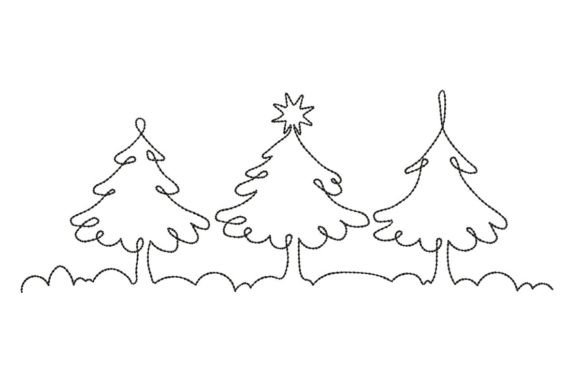
Christmas Trees Line Art Design Review
As an experienced embroidery designer who has spent years refining digital assets for commercial production, I approach every new design file with a specific lens: Is this viable for small business merchandise? It is not enough for a design to simply look pretty on a screen; it must hold up under the tension of machine stitching, withstand the wear and tear of daily use, and enhance brand identity rather than distract from it. Today, I am reviewing the Christmas Trees Line Art design, evaluating its potential for embroidered patches, branded apparel, and retail product lines.
First Impressions: Professionalism Meets Festive Charm
The title Christmas Trees Line Art suggests a minimalist aesthetic, which is currently one of the most sought-after styles in the handmade and boutique markets. From a design perspective, line art offers a clean, modern silhouette that feels premium without being overly cluttered. When I first analyze a design like this, I look for balance and clarity. Does the negative space breathe? Is the outline consistent enough to stitch reliably at various sizes?
This design appears to strike a strong balance between elegance and approachability. The description notes that it is "fun and easy to stitch," which is a critical indicator for high-volume production. For small business owners, time is money. A design that requires excessive trimming or complex color changes can bottleneck production. If this line art relies on simple outlines with minimal fill, it promises faster turnaround times and lower thread consumption, making it an attractive option for profit margins on items like tote bags, aprons, and caps.
Real-World Business Applications
The versatility of Christmas Trees Line Art makes it a powerful asset for diverse commercial applications. Here is how I see it performing across key product categories:
- Embroidered Patches: This design is ideal for creating cohesive brand patches. The clean lines allow for effective satin stitching around the perimeter, creating a sharp border that defines the shape against any fabric background. These patches can be sewn onto denim jackets, backpacks, or hats to create limited-edition holiday merchandise.
- Staff Uniforms and Aprons: For cafes, bakeries, or florists, subtle branding is often preferred over loud logos. Placing this design on the chest pocket of a work shirt or the upper corner of an apron adds a touch of seasonal warmth without overwhelming the professional look. It signals attention to detail and care for the customer experience.
- Caps and Headwear: Cap embroidery requires designs that are compact and legible. Line art translates exceptionally well to curved surfaces because there are no large solid blocks of thread that might pucker the fabric. This design could serve as a charming accent on the side or front of beanies and baseball caps.
- Tote Bag Designs: Canvas totes are a staple for craft fairs and Etsy sellers. A single, elegant tree motif stitched in white or gold thread on a natural canvas bag exudes a rustic, handmade quality that resonates with eco-conscious consumers.
- Product Packaging Accents: Beyond apparel, consider using this design on hang tags attached to your products. Embroidery on thick cardstock or felt tags adds significant perceived value to your finished product, differentiating your brand from competitors who rely solely on printed labels.
Brand Identity and Customer Trust
In the world of small business merch, visual consistency builds trust. Using a design like Christmas Trees Line Art helps establish a recognizable visual language. When customers see a consistent style across your social media, packaging, and physical products, they begin to associate those visuals with your brand’s quality. Furthermore, embroidery conveys durability and longevity. Unlike a print that may crack or fade after a few washes, an embroidered design suggests a product built to last. This perception directly influences buyer engagement and justifies a higher price point for your handmade products.
Strategic Considerations and Potential Pitfalls
While the aesthetic appeal is clear, a professional review must address technical limitations. Not every surface is suitable for every design application. There are specific scenarios where Christmas Trees Line Art requires careful consideration:
- Small Patch Sizes: If you plan to scale this design down to a very small size (under two inches), ensure the line weight remains visible. Extremely thin lines can become lost or distorted if the stitch density is too low.
- Curved Surfaces: While caps are generally good candidates, highly curved areas like the crown of a structured hat can distort linear elements. Always test on the actual garment type before committing to bulk production.
- Fabric Texture: On highly textured fabrics like heavy wool or loose-weave linen, fine lines may get obscured. This design works best on smoother fabrics such as cotton twill, jersey, or canvas where the needle can penetrate cleanly and the thread lies flat.
- Dark Uniforms: If stitching on dark-colored uniforms, you will need a substantial underlay or a contrasting thread color. Ensure that the thread colors chosen provide enough contrast against the base fabric to maintain the integrity of the line art.
- High Stitch Density: Although described as easy to stitch, verify the stitch density settings. Too much density on a simple line art design can cause puckering, especially on lightweight fabrics used for delicate garments.
Practical Designer Notes for Production
Before integrating Christmas Trees Line Art into your commercial workflow, I recommend following these essential steps to ensure a polished result:
- Test in Black and White: First, digitize or view the design in monochrome to check the composition. If the shape reads clearly in black and white, it will likely translate well in color.
- Check Hoop Size: Confirm the required hoop size matches your available equipment. Ensure the design fits comfortably within the hoop area of your target garment to avoid distortion during stitching.
- Review Thread Color Contrast: Select thread colors that complement your brand palette but still offer sufficient contrast. Experiment with metallic or variegated threads sparingly to add flair without compromising the clean lines.
- Inspect Spacing and Stabilizer: Use the appropriate stabilizer for your fabric type. Cut-away stabilizers are generally recommended for stretchy fabrics like jerseys to prevent shifting, while tear-away may suffice for woven cottons.
- Create a Printable Mockup: Before producing physical samples, generate a printable mockup to show clients or stakeholders. This allows for approval on placement and sizing without wasting materials.
- Confirm Commercial Licensing: Crucially, verify the licensing terms of the digital embroidery file. Ensure you have the right to sell physical goods created with this design, as some licenses restrict commercial use or require additional fees per item sold.
Final Verdict for Merch Creators
Christmas Trees Line Art represents a smart investment for small business owners looking to expand their holiday inventory. Its clean aesthetic aligns with current trends toward minimalist, premium branding. By understanding its strengths in patch and apparel applications, while carefully managing technical factors like fabric choice and stitch density, you can create high-quality merchandise that elevates your brand presence. Remember to always test on real fabric and confirm all technical details before scaling up production. With proper execution, this design can become a standout element in your custom apparel and gift collections.