Kiwi Christmas Happy Xmas Embroidery Review
As an embroidery designer who spends hours tweaking stitch paths and testing thread tensions, I approach every new digital file with a mix of excitement and skepticism. The market is saturated, but few designs truly capture the spirit of the season while remaining practical for mass production or high-end custom work. Recently, I pulled Kiwi Christmas Happy Xmas from my library to test its viability for our upcoming holiday collection. This isn’t just about whether it stitches well; it is about whether it sells. Whether you are an Etsy seller, a small shop owner, or a crafter looking to elevate your personalized gift offerings, understanding the nuance of this design is crucial.
First Impressions: Mood and Charm
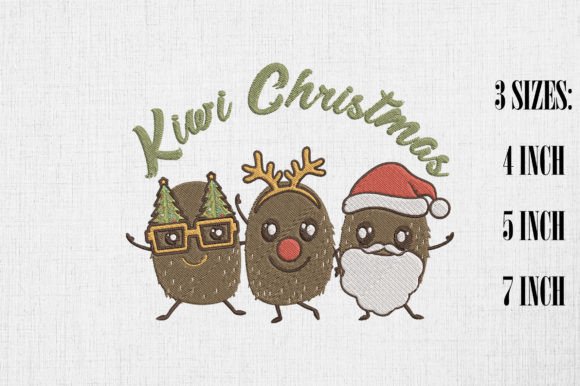
The moment I loaded the Kiwi Christmas Happy Xmas embroidery file into my hoop, the mood was set. It strikes a delicate balance between playful and classic. Unlike many holiday designs that rely heavily on heavy satin stitches which can look bulky and cheap, this design feels lighter, airier, and distinctly handmade. The kiwi motif adds a touch of whimsy that breaks away from the traditional red-and-green clichés, making it feel modern yet timeless.
For a handmade product creator, this emotional appeal is vital. It doesn’t scream "holiday sale"; it whispers "thoughtful gift." The charm lies in its simplicity. It feels sweet without being childish, and elegant without being stiff. When I looked at the finished sample on a neutral linen, it felt romantic and seasonal all at once. This versatility is what makes it a strong contender for various customer bases, from young parents to wedding planners.
Application Scenarios: From Baby Blankets to Totes
In my experience, the true test of a machine embroidery design is how it translates across different mediums. I ran several tests with Kiwi Christmas Happy Xmas to see where it shines.
- Baby Embroidery: This is perhaps the strongest use case. The soft aesthetic pairs beautifully with organic cotton muslin for blanket embroidery projects. Because the design elements are not overly aggressive, they feel safe and gentle for nursery decor. Parents are looking for items that feel personal and tender, and this design delivers that warmth perfectly.
- Kitchen and Home Decor: On a high-quality embroidered towel or a pillow cover, the design acts as a focal point without overwhelming the fabric. It works exceptionally well as a hostess gift. The contrast against white or cream fabrics highlights the detail, making it a perfect addition to any home’s holiday table setting.
- Fashion Accessories: For the wedding gift market, consider placing this on aprons or tote bags for bridal showers. The playful nature of the kiwi fits the casual elegance of modern weddings. It also performs well on dresses and scarves, adding a subtle pop of personality to wearable items.
- Digital Product Potential: If you are a digital product seller, this design serves as an excellent base for printable mockups. Its clean lines allow for easy visualization on various products, helping customers imagine the final result before purchasing.
Attracting the Right Customer
Who buys this? It appeals to the buyer who values uniqueness over mass-produced uniformity. It attracts the customer who wants their custom embroidery to tell a story. By using Kiwi Christmas Happy Xmas, you are signaling to your audience that you care about design integrity. This builds customer trust and enhances the perceived value of your brand. When a customer sees a thoughtfully placed design on a quality garment, they are more likely to engage with your shop and leave positive reviews.
Critical Considerations: Where to Exercise Caution
No design is flawless, and as a professional, I must highlight where Kiwi Christmas Happy Xmas requires careful handling. Ignoring these factors can lead to unhappy customers and ruined inventory.
First, be mindful of small lettering and delicate details. While the overall shape is clear, fine text elements may lose definition if the stitch density is too low or if the fabric moves excessively during stitching. Avoid using this on highly textured fabrics like heavy bouclé or thick terry cloth towels unless you have tested the specific combination thoroughly. The needle may struggle to penetrate dense weaves, leading to skipped stitches.
Furthermore, stretchy baby clothes require a stabilizer that matches the fabric’s give. If the stabilizer is too rigid, the finished piece will pucker. Similarly, applying this design to curved surfaces, such as the body of a hat or a fitted dress, demands advanced technique. A flat hoop cannot replicate the curvature, so planar distortion must be managed carefully.
Dark fabrics present another challenge. Without proper underlay stitches, the design may look washed out. Always compare light and dark fabric mockups before committing to a production run. Additionally, products that need frequent washing, such as kitchen towels, must be pre-washed and stabilized correctly to prevent shrinkage from distorting the thread colors.
Practical Embroidery Notes for Success
To ensure your finished product meets professional standards, follow these technical steps when working with this file:
- Test on Scrap Fabric: Never go straight to the final item. Stitch the design on a scrap of the exact same fabric type to check tension and pull.
- Check Thread Color Contrast: Ensure the chosen threads stand out against the background. High contrast usually yields a more legible and attractive result.
- Confirm Hoop Size: Verify that the design dimensions fit comfortably within your machine’s maximum hoop size, allowing room for maneuvering.
- Review Stitch Density: Look at the digitization. Is the density appropriate for the fabric weight? Too much density can make light fabric stiff; too little can make it transparent.
- Use Proper Stabilizer: Match the stabilizer (cut-away, tear-away, or water-soluble) to the fabric’s behavior. For knit baby clothes, a cut-away stabilizer is often best for longevity.
- Inspect Small Details: After stitching, zoom in on the smallest elements. Are they distinct, or have they merged into a blob?
- Verify Commercial Licensing: Before selling any commercial embroidery products, double-check the license terms associated with the digital embroidery file. Some files are for personal use only, while others allow limited commercial sales.
Final Thoughts on Giftability and Value
Ultimately, Kiwi Christmas Happy Xmas is more than just a pattern; it is a tool for creating emotional connections. In a world of mass-produced goods, a handmade product with a unique design stands out. This design boosts product photography potential because its cheerful vibe photographs beautifully, attracting clicks and engagement on social media platforms.
For the small shop product maker, this design offers a low-risk, high-reward opportunity. It is versatile enough to be used on multiple items, maximizing the utility of your initial investment. Whether you are creating a one-of-a-kind wedding gift or a batch of Etsy seller listings for the holiday rush, this design provides the foundation for quality and charm.
By paying attention to the technical details—hoop size, stabilizer choice, and fabric texture—you can transform this simple embroidery file into a cherished keepsake. The key is to treat each project with care, ensuring that the final output reflects the quality and thoughtfulness that your customers expect. With Kiwi Christmas Happy Xmas, you have a design that is ready to bring joy, warmth, and a touch of festive flair to any personalized gift.