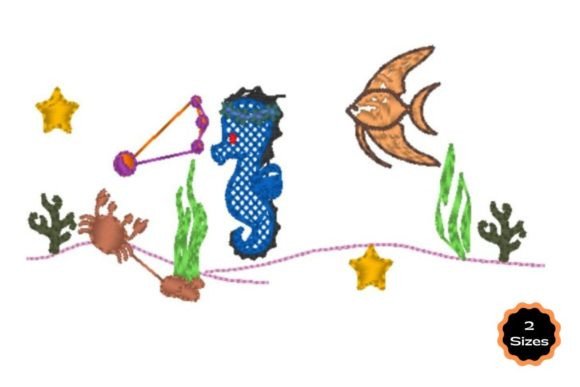
Sea Animals Embroidery Design Review
As an experienced embroidery designer who has spent years translating digital concepts into tangible, stitched assets for brands, I approach every new file with a critical eye. We aren't just looking at pretty pictures; we are evaluating production viability, brand alignment, and customer perception. Today, I am reviewing the Sea Animals machine embroidery design. The product description highlights that this is an adorable piece meant to give fabrics an extraordinary look, serving as a nice accent on various materials. For small business owners, Etsy sellers, and merch creators, understanding the nuance of such a design is crucial before committing to bulk production or adding it to your digital asset library.
First Impressions: Visual Personality and Brand Fit
When you first load the Sea Animals embroidery file into your digitizing software, the immediate takeaway is its playful yet polished aesthetic. The term "adorable" in the description suggests a design that leans towards the friendly and approachable rather than the stark or corporate. This makes it an excellent candidate for businesses that want to project warmth and creativity. Whether you are running a boutique handmade shop, a local bakery with a nautical theme, or a creative studio specializing in children’s apparel, this design fits seamlessly into those visual identities.
The design feels modern but retains a classic charm. It does not scream for attention with aggressive boldness; instead, it invites the viewer in. For a small café looking to add character to their staff uniforms or a florist wanting to stamp their branded tote bags, this level of subtlety is often more effective than loud, complex graphics. It signals that the brand cares about detail without being overwhelming. However, if your brand identity is strictly minimalist or high-end luxury, you might find this design too decorative. It shines brightest when used to enhance a handmade product or to add a touch of whimsy to custom apparel.
Real-World Business Applications
The true test of any digital embroidery file is how it performs in real-world commercial applications. Here is how Sea Animals holds up across various common use cases for small business merchandise.
- Embroidered Patches: One of the most popular uses for designs like this is creating iron-on or sew-on patches. Because the description mentions it comes with multiple elements (likely color changes or components), it works well as a standalone badge. Imagine placing a Sea Animals patch on the chest of a denim jacket for a youth clothing line, or on the back of a baseball cap for a surf shop. It adds instant brand recognition without the need for full-chest printing.
- Staff Uniforms and Aprons: For a seafood restaurant or a beachside cafe, this design can serve as a subtle logo on apron embroidery or work shirts. It humanizes the staff and creates a cohesive team look. Unlike a stiff corporate logo, a cute sea creature design fosters a relaxed, welcoming atmosphere that customers appreciate.
- Tote Bag Design: Canvas totes are a staple for craft fairs and eco-friendly brands. Sewing this design onto a natural canvas tote bag provides a beautiful contrast between the rustic fabric texture and the smooth threads. It elevates a simple promotional item into a desirable giveaway or sale product.
- Caps and Headwear: Cap embroidery requires precision. If the Sea Animals design is compact enough, it works beautifully on the front panel of a structured cap. It appeals to outdoor enthusiasts, fishermen, or anyone with a love for marine life. Ensure the curve of the cap is accounted for during digitizing to prevent distortion.
- Product Packaging Accents: Don’t overlook packaging. Adding a small embroidered label with this design to gift boxes, soap bars, or candle jars can significantly increase perceived value. It transforms a commodity into a premium, handmade product.
Brand Identity and Customer Trust
In the world of small business merch, consistency is key. Using a design like Sea Animals helps establish a visual language that customers begin to recognize and trust. When a buyer sees this specific style of embroidery repeatedly on your products—from tote bags to hats—they associate that quality and aesthetic with your brand name. It communicates professionalism mixed with personality. A well-executed embroidered patch looks far more durable and high-quality than a printed sticker, which directly impacts buyer engagement and repeat purchases.
Critical Considerations and Limitations
While the design has strong potential, there are specific areas where caution is required. As a professional reviewer, I must highlight where this design might struggle if not handled correctly.
- Small Patch Sizes: If you plan to scale this down to a very small size (under 2 inches), details may get lost. Intricate outlines or tiny text within the design could merge together, resulting in a muddy appearance. Always test the design at its intended final size before mass producing.
- Curved Surfaces: Embroidering on curved surfaces like caps or sleeves can distort circular or symmetrical designs. If the Sea Animals motif relies on perfect symmetry, ensure your digitizer has compensated for the curvature of the target garment.
- Thread Color Contrast: The description notes it gives an "extraordinary look," which implies vibrant thread colors. On dark uniforms or dark fabric textures, light-colored threads might not pop as expected. You may need to add a backing stabilizer or underlay stitches to ensure opacity and clarity.
- Frequent Washing: For items like aprons or work shirts that undergo frequent industrial washing, stitch density matters. If the design is too sparse, it may fray over time. Conversely, if it is too dense, the fabric may pucker. Check the stitch density of the file to ensure it balances durability with fabric integrity.
Practical Designer Notes for Production
Before you integrate Sea Animals into your commercial embroidery workflow, follow these essential steps to ensure a successful finished product.
Test in Black and White First: Convert the design to grayscale in your software. This helps you evaluate the balance of negative space and positive fill. If the design looks cluttered in black and white, it will likely look messy in color.
Check Hoop Size and Stability: Confirm the hoop size requirements of the digital embroidery file. A design that requires a large hoop might be impractical for small items like pet collars or tiny tags. Ensure you have the right equipment to execute it cleanly.
Use Proper Stabilizer: The choice of stabilizer (cut-away vs. tear-away) depends heavily on the fabric texture. For stretchy knit fabrics used in t-shirts or caps, a cut-away stabilizer is usually necessary to prevent the embroidery from distorting the material over time.
Create a Printable Mockup: Before cutting fabric, generate a printable mockup. Place the design onto images of your actual products (aprons, hats, bags). This allows you to visualize spacing and proportion relative to the rest of the item’s branding.
Verify Commercial Licensing: Most importantly, check the license terms of the Sea Animals embroidery file. Just because you bought the file does not automatically grant you the right to sell unlimited quantities of merchandise. Ensure you have commercial rights to use this design asset for profit, especially if you are scaling up production.
By carefully evaluating the Sea Animals design through these practical lenses, you can transform a simple digital file into a powerful tool for brand growth. It offers a charming, versatile option for small businesses looking to stand out in a crowded market, provided the technical execution matches the creative vision.