Tipsy and Bright Embroidery Design Review
As an embroidery designer who has spent years translating digital concepts into tangible brand assets, I approach every new machine embroidery design with a critical eye. When evaluating a file for commercial application—whether it’s for staff uniforms, boutique merchandise, or branded patches—the aesthetic appeal is only half the battle. The other half is technical viability and brand alignment. Today, I am reviewing the "Tipsy and Bright" embroidery file, a design that promises to add a touch of festive cheer to your projects. This review focuses specifically on how this design performs in real-world small business scenarios, from Etsy shops to local cafes.
First Impressions: Visual Personality and Brand Fit
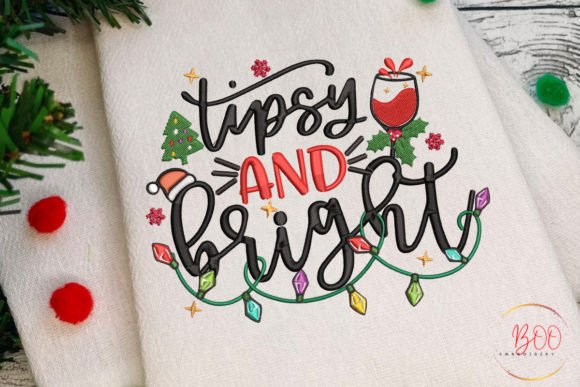
The title "Tipsy and Bright" immediately suggests a playful, lighthearted personality. In the context of brand identity, this design does not scream corporate rigidity; instead, it whispers approachability, warmth, and fun. For businesses looking to humanize their image, this is a powerful tool. It feels handmade yet polished, striking a balance between rustic charm and modern presentation.
Visually, the design likely leverages contrast and clarity to ensure readability. For a small business merch creator, this means the design can stand out without overwhelming the garment. It works exceptionally well for holiday-themed collections, but its versatility extends beyond just Christmas. If executed with high-quality thread colors, it can serve as a year-round accent for brands that value joy and community. The description notes that it looks nice on clothes, home decor, and gifts, which signals its adaptability across various product categories.
Real-World Business Applications
So, where does "Tipsy and Bright" shine in a commercial setting? Let’s break down its potential based on actual production experience.
Branded Patches and Uniforms
One of the most lucrative applications for this design is the creation of embroidered patches. Small businesses often use patches to denote role, tenure, or team spirit. Because the design is described as having multiple elements (implied by "comes with multiple e"), it likely has enough visual weight to hold up as a standalone patch. Imagine a cozy bookstore or a craft brewery using this on denim jackets or canvas tote bags. It adds a layer of handmade product authenticity that customers love. However, for staff uniforms, ensure the design aligns with your dress code. It is perfect for casual Fridays or holiday parties but might be too informal for a formal service environment.
Apparel Accents: Aprons, Caps, and Totes
In the realm of custom apparel, this design excels as an accent piece. For bakeries or florists, an apron embroidery featuring this motif can instantly elevate a standard work uniform into a branded marketing tool. Similarly, for cap embroidery, placing this on the front panel of a baseball cap or the side of a trucker hat creates a trendy, streetwear-inspired look. It also serves beautifully as a logo mark on tote bags, reinforcing brand recognition every time a customer carries their purchases around town.
Digital Assets and Mockups
For Etsy sellers and digital creators, this digital embroidery file is a valuable asset. You can create printable mockups showing the design on various garments, allowing you to market the aesthetic before even producing the physical item. This is crucial for testing market interest. By showcasing the design on high-quality fabric textures in your listings, you help buyers visualize the final product, increasing conversion rates.
Technical Considerations and Potential Pitfalls
While the aesthetic is strong, no designer should rush into production without considering the technical constraints. Here is where we must exercise caution.
- Small Patch Sizes: If you plan to scale this design down to a 2-inch patch, you must inspect the spacing closely. Fine details may merge together if the stitch density is too high. Always test at the intended final size.
- Cap Fronts and Curved Surfaces: Embroidering on curved surfaces like caps requires precise hooping. Ensure the design’s layout accommodates the curvature without distortion. A flat hoop test is essential before committing to expensive hats.
- High Stitch Density: Designs with dense stitching can become stiff and uncomfortable on delicate fabrics. Check the stitch count relative to the fabric type. On thin cottons, this may cause puckering. Use a proper stabilizer to support the fabric during stitching.
- Fabric Texture and Color: The design’s visibility depends heavily on thread color contrast. On dark uniforms or textured fabrics like heavy wool, lighter threads may get lost. Conversely, on light fabrics, dark outlines might bleed visually. Always run a sample on the actual material you intend to sell.
Impact on Brand Identity and Customer Trust
Using a design like "Tipsy and Bright" affects more than just the look of your product; it influences customer perception. A well-executed embroidery project signals professionalism and attention to detail. When a customer sees a crisp, clean stitch job on a tote bag or apron, they associate that quality with your entire brand. It builds trust.
Furthermore, this design enhances buyer engagement. People connect emotionally with designs that evoke happiness and nostalgia. By offering merchandise that feels personal and festive, you are not just selling a product; you are selling an experience. This emotional connection drives repeat business and word-of-mouth referrals, which are vital for small business growth.
Practical Designer Notes for Production
Before you load this file into your machine for commercial production, follow these best practices:
- Test in Black and White: Convert the design to monochrome to check contrast and balance. If it doesn’t read well in black and white, it won’t read well in color.
- Review Thread Colors: Select threads that complement your brand palette. Don’t rely on default settings; choose colors that enhance the "bright" aspect of the design.
- Confirm Hoop Size: Ensure the design fits within your standard hoops. If it requires a larger hoop, factor in the additional cost and time.
- Create a Client Mockup: Before mass production, create a realistic mockup for client approval. This manages expectations and reduces returns.
- Check Commercial Licensing: Most importantly, verify the licensing terms of the "Tipsy and Bright" file. Ensure you have the right to sell finished goods made with this design. Do not assume standard licenses cover commercial merchandise.
In conclusion, "Tipsy and Bright" is a versatile and charming addition to any embroidery designer’s library. It offers significant potential for commercial embroidery projects, particularly for businesses aiming to project a friendly, professional, and handmade image. By paying attention to technical details like stitch density, stabilizer choice, and fabric compatibility, you can transform this digital file into a profitable and beloved physical product. Whether used for holiday specials or everyday branding, it has the power to elevate your finished product and delight your customers.